Mini Project 4: Copper Futures Price Forecasting Using BiLSTM
Table of Contents
Introduction #
Copper plays an extremely important role in the global economy, with uses spanning from infrastructure to electronics. The purpose of our study is to better understand the behavior of copper within our stock market, specifically the copper future prices. We chose to utilize a Bidirectional Long Short-Term Memory (BiLSTM) model in order to accurately take into consideration both forward and backward moving variables, based on historical data from three sources: CME Group / COMEX Copper (HG), Shanghai Futures Exchange (CU), and London metal exchange (CA).
| Exchange (venue code) | Contract unit | Price quote | Typical trading hours (local) | Warehouse/delivery system | Tick size |
|---|---|---|---|---|---|
| London Metal Exchange – LME Copper (CA) | 25 metric tonnes | USD per tonne | 01:00-19:00 London (ring + LMEselect) | Global LME-approved sheds; “warrants” transferable | USD 0.10/tonne (Lme) |
| Shanghai Futures Exchange – SHFE 铜 (CU) | 5 t | CNY per ton | 09:00-15:00 & 21:00-02:00 Beijing | Mainland China warehouses; VAT & import‐quota rules apply | ¥10/ton (≈USD 1.4) (tsite.shfe.com.cn, Barchart.com) |
| CME Group / COMEX Copper (HG) | 25 000 lb (≈11.34 t) | USD ¢ per lb | 18:00-17:00 ET (electronically) | U.S. COMEX-licensed warehouses; deliverable Grade 1 cathode | USD 0.0005/lb (CME Group, CME Group) |
Data #
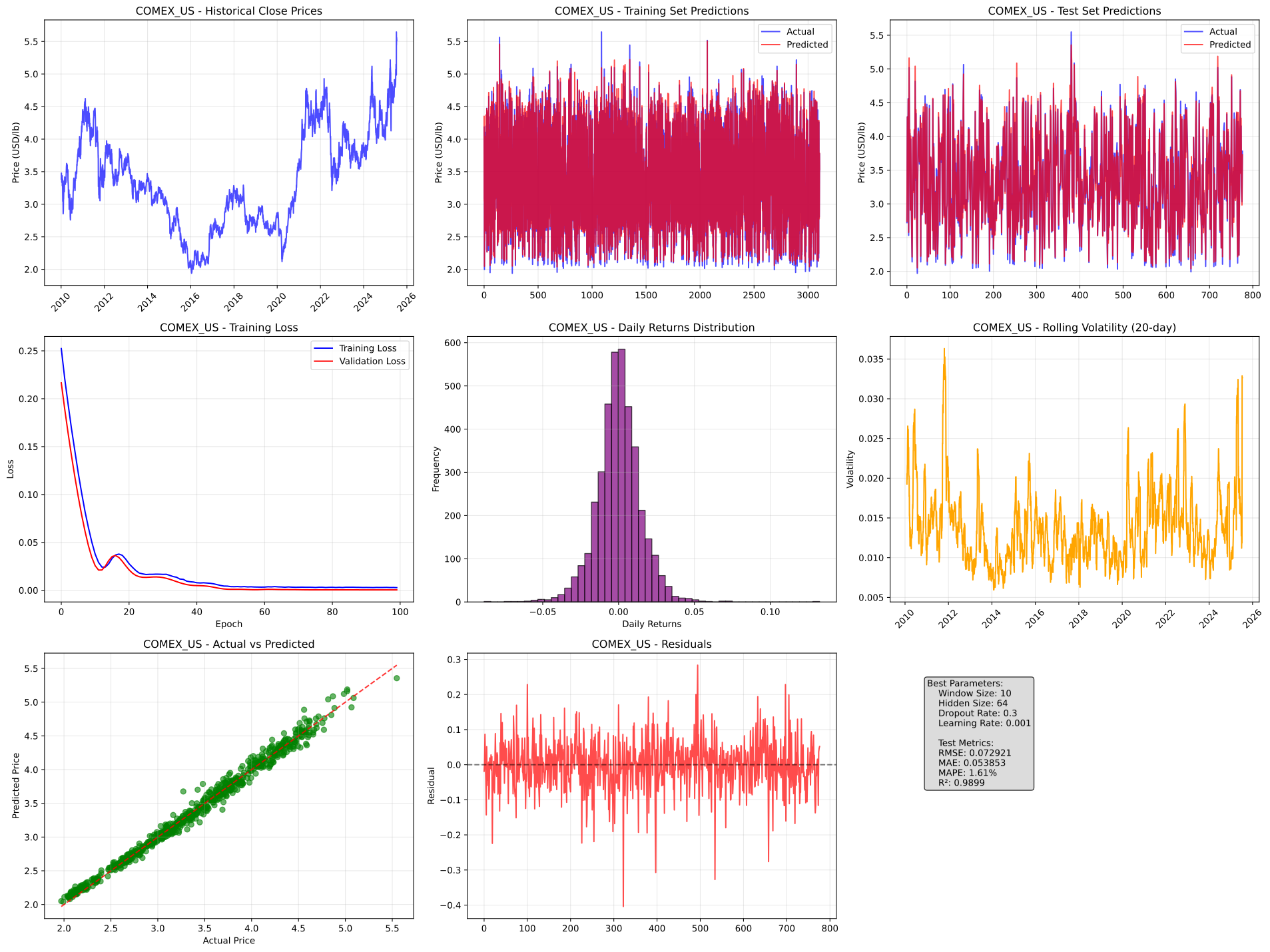
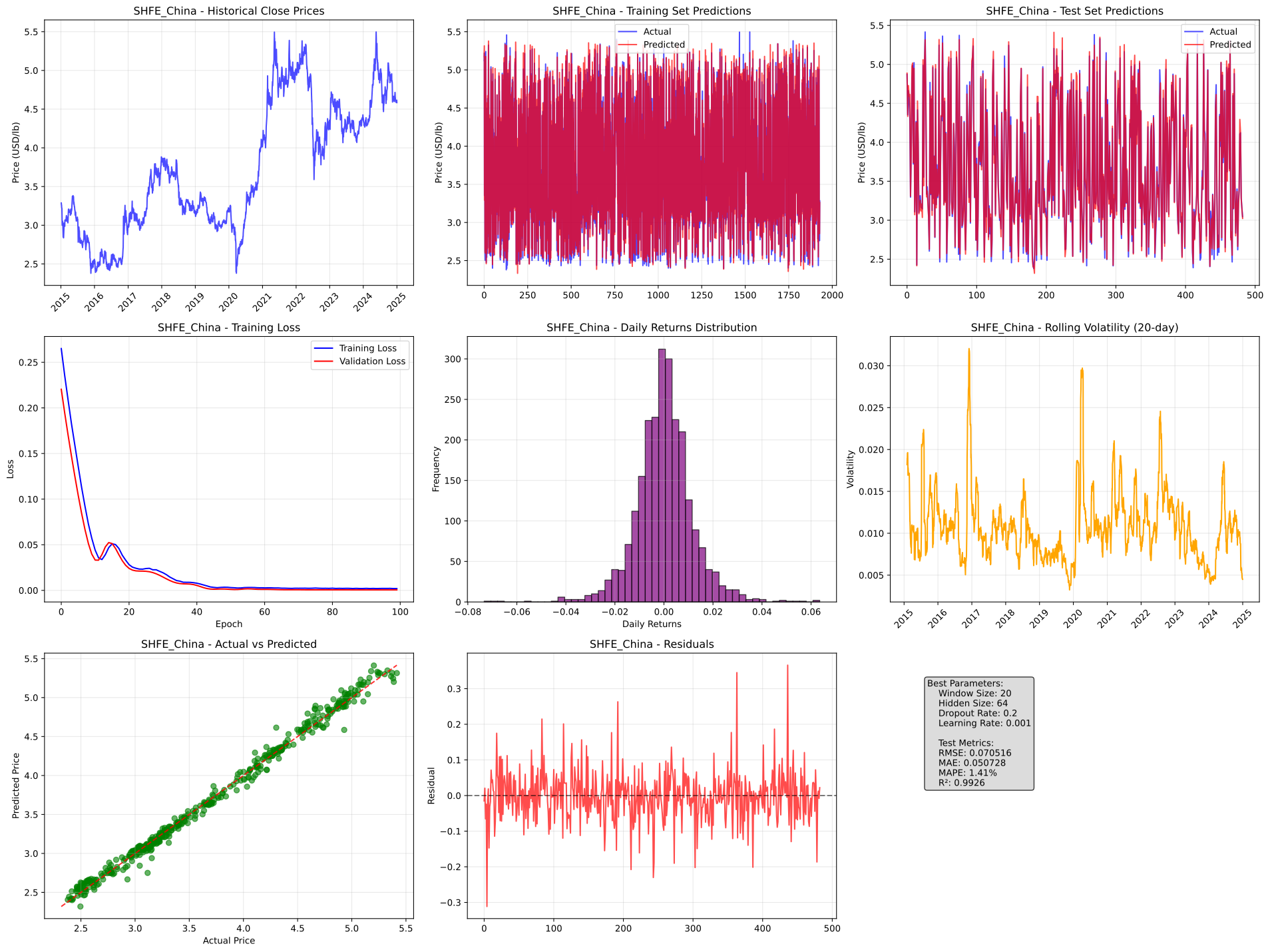
We utilized various different datasets that consisted of historical daily closing prices of copper futures obtained from different exchanges. Our datasets included data from several years, allowing our model to learn from past behaviors and thus adapt to both long-term patterns and short-term volatility. We mainly used Yahoo Finance via its yfinance API, incorporating its adjusted closing price (Adj close).


Methodology #
Preprocessing #
- Handled any missing values
- Normalized prices through MinMax scaling on a [0,1] range
- Created sequence generation for supervised learning
- Chose a sliding window of 30
- Split data in a 70:30 ratio of training and testing sets respectively to ensure no shuffling
Model Design #
We used a Bidirectional LSTM neural network as we believed it would be beneficial in understanding both forward and backward time dependencies and variables, which is important especially in time-series data like financial forecasting.
Model Structure #
- The model was built to take in a 30-day window of past copper prices and predict the next day’s price.
- It uses a single Bidirectional LSTM (
BiLSTM) layer with 64 hidden units, which helps the model learn patterns from both past and future directions in the time series. - A simple linear layer at the end outputs the predicted price.
- Training was done over 50 epochs with a batch size of 64.
- The model used the Mean Squared Error (
MSE) as its loss function and the Adam optimizer, which is well-suited for time-series problems like this.
Discussion #
The BiLSTM model demonstrated extremely strong predictive ability:
- MSE: 5.33e-06
- RMSE: 0.0023
- MAE: 0.0019
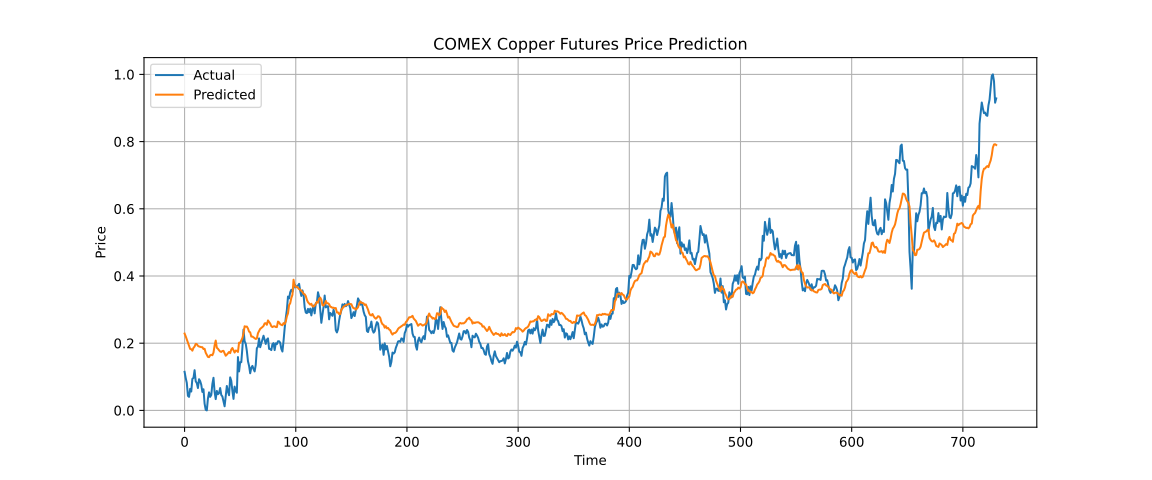
- R²: 0.9887
These results show that the model performs very well. The predicted prices are accurate with the actual values in the test set, suggesting that the BiLSTM effectively captures patterns and trends in the copper market. A strong indication of accuracy is the R² score of 0.9887, which means the model accounts for nearly 99% of the variation in prices.
Nevertheless, it is important to remain cautious about potential overfitting, especially with time-series data where future values can be hard to predict reliably.
Future Opportunities #
Long-Term Forecasting: While the model currently focuses on predicting just the next day’s price, we will look in future versions to extend the forecast window. Predicting prices over multiple days could offer more practical value for traders and analysts.
Additional Features: Improving performance by bringing in additional features such as macroeconomic indicators like the U.S. dollar index or manufacturing activity, which often influence commodity prices.
Real-Time Analysis: By evaluating how well the model generalizes to new data, we plan to use time-aware validation methods like walk-forward analysis. This would give a more realistic picture of how the model performs in real-world trading scenarios.