Mini Project 3: Clustering Movies Based on Characteristics
Table of Contents
Introduction #
The purpose of our study was to utilize machine learning techniques to effectively group movies with their characteristics in order to provide insights into applications such as market segmentation and recommendation settings.
Data #
We made use of a dataset that included information about various features of movies such as genre flags, popularity scores, runtime durations, and average viewer ratings. Furthermore, during our exploratory data analysis (EDA), we were able to assess certain measurements and the general presence of any missing values.
Methodology #
Exploratory Data Analysis #
- Examined the dataset’s structure (shape, number of rows and columns, missing values).
- Calculated the number of unique clusters identified during clustering and examined statistical summaries of quantitative features.
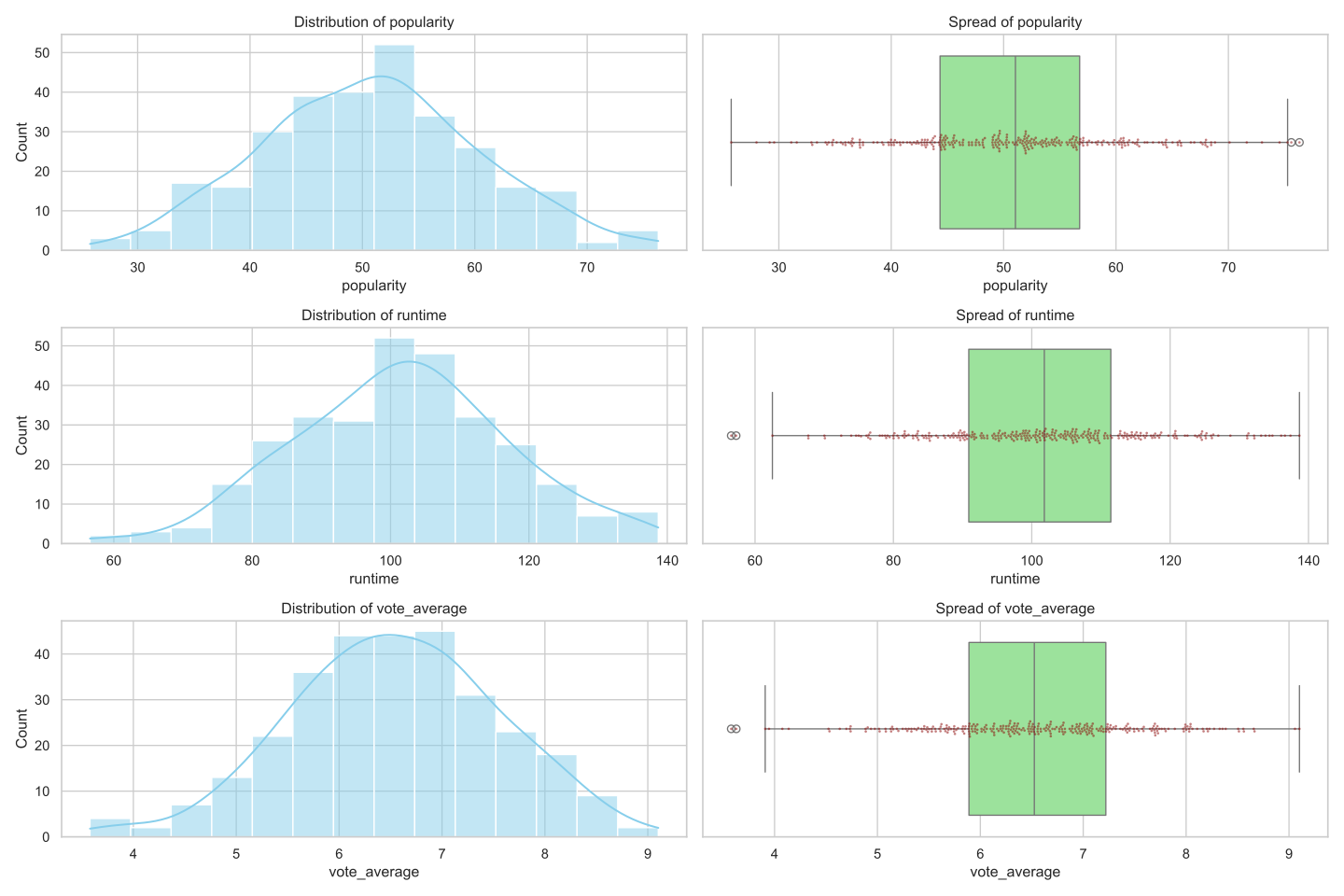
- Analyzed distributions of key features to visualize shape, potential outliers, center, and spread.
Feature Analysis #
- Visualized distributions using histograms and boxplots.
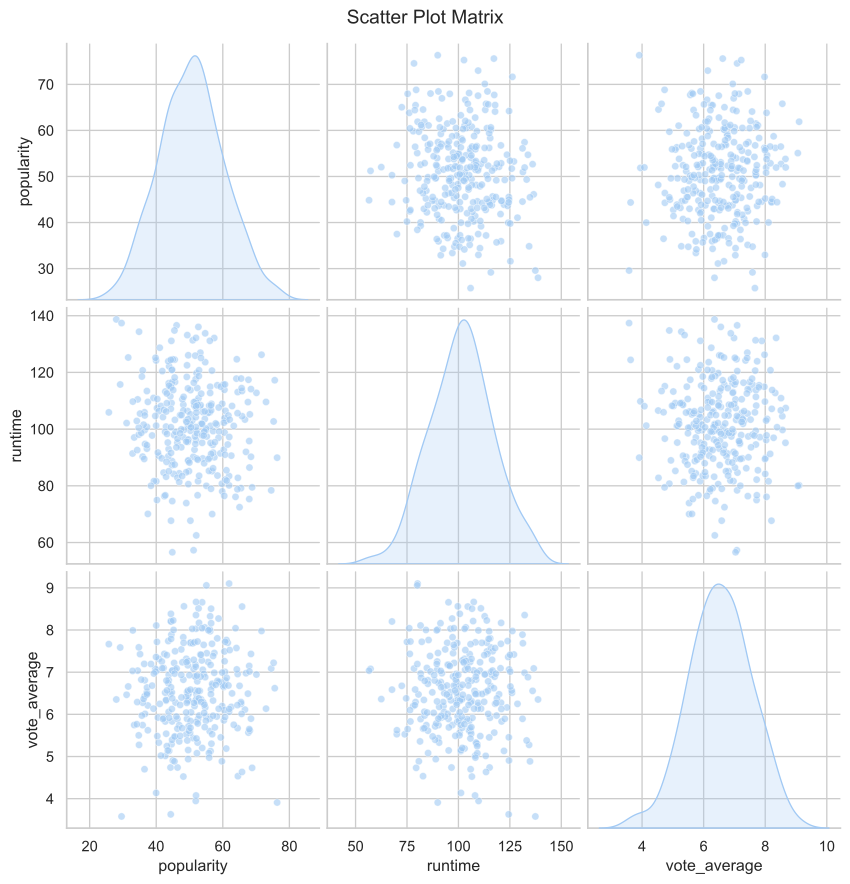
- Created scatter plot matrices to illustrate relationships and correlations between quantitative features.
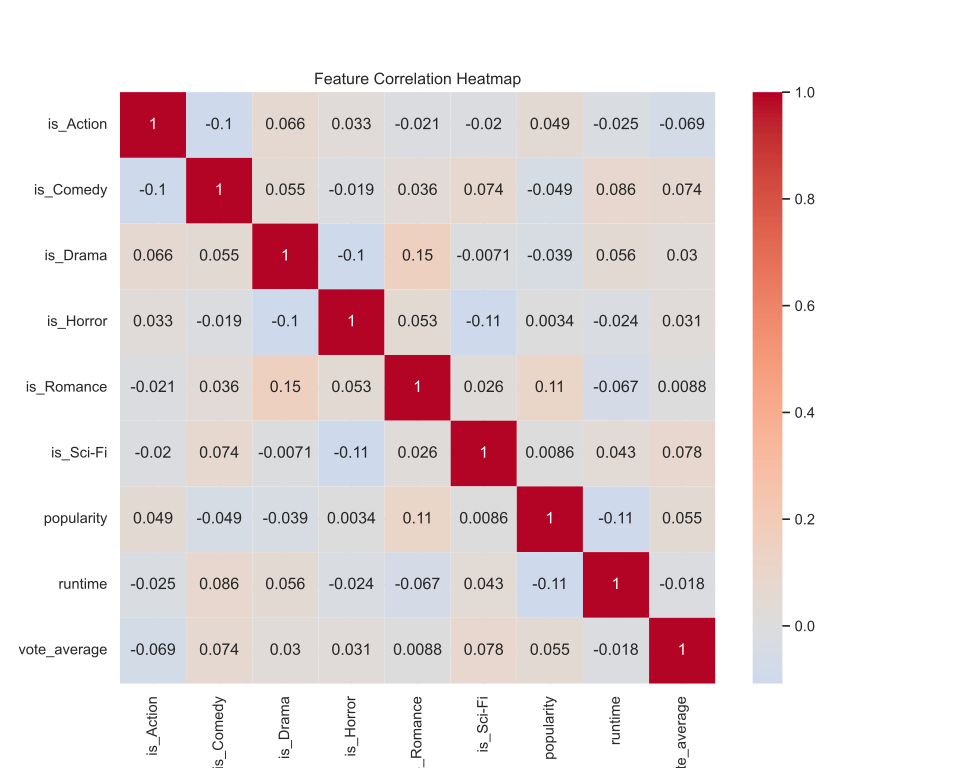
- Generated a correlation heatmap to identify possible linear relationships between genre flags, popularity scores, runtime durations, and vote average ratings.
Clustering Preparation #
- Standardized features using
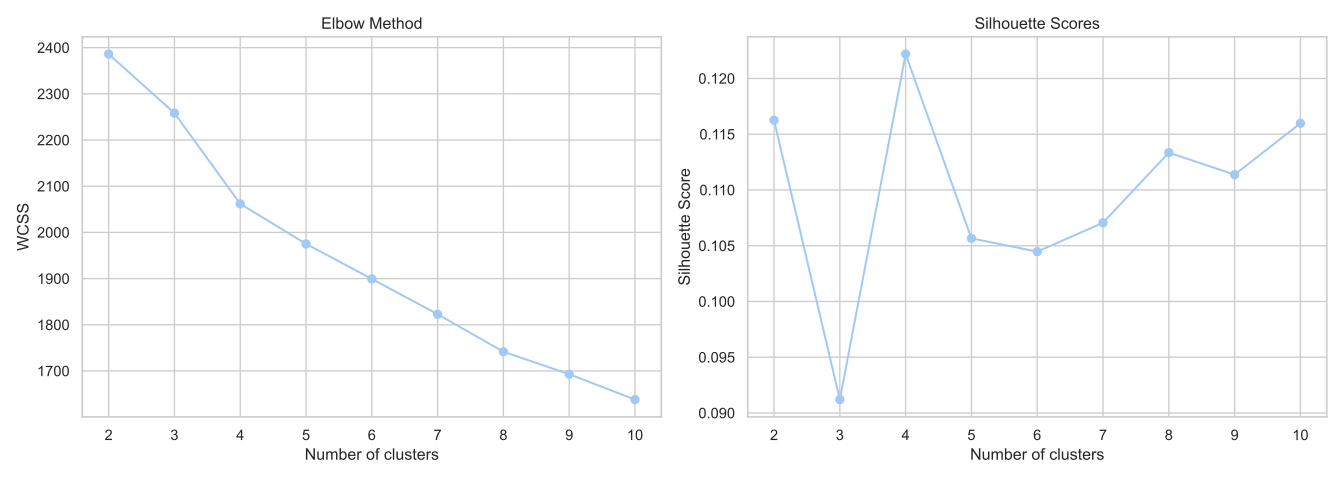
StandardScalerto ensure all features contributed equally to clustering, preventing features with larger scales from dominating distance calculations. - Determined the optimal number of clusters to be 5 using:
- Elbow Method: Assessed within-cluster sum of squares (WCSS) for different cluster counts, with the “elbow” point indicating diminishing returns when adding more clusters.
- Silhouette Scores: Measured how similar objects are to their own cluster compared to other clusters; higher silhouette scores indicate better-defined clusters.
Dimensionality Reduction #
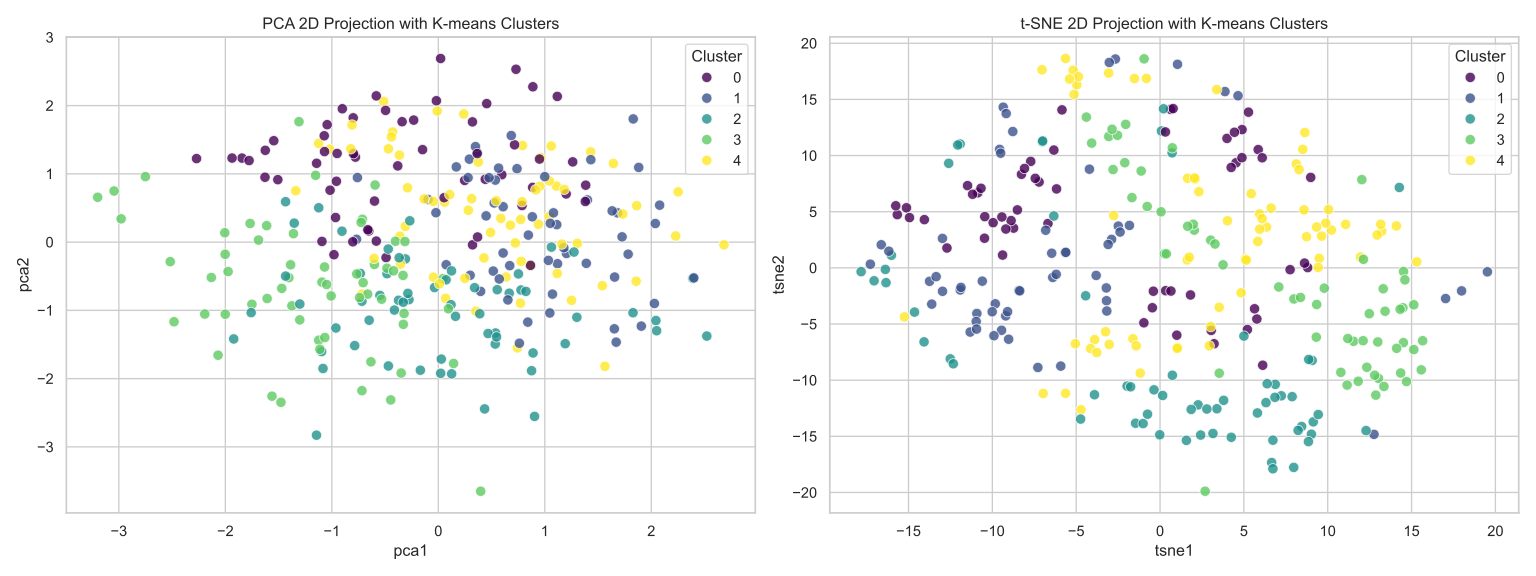
We used two techniques to visualize high-dimensional data in 2D:
- Principal Component Analysis (PCA): Linear dimension reduction projecting data onto orthogonal axes maximizing variance to obtain uncorrelated principal components.
- t-Distributed Stochastic Neighbor Embedding (t-SNE): Nonlinear probabilistic algorithm minimizing Kullback–Leibler divergence between joint probability distributions of high-dimensional and low-dimensional data to preserve local neighborhood structure for visualization.
K-means Clustering #
- Used K-means to group movies into the five identified clusters.
- Visualized resulting clusters in both PCA and t-SNE 2D projected spaces to observe separation and distribution.
- Analyzed cluster characteristics:
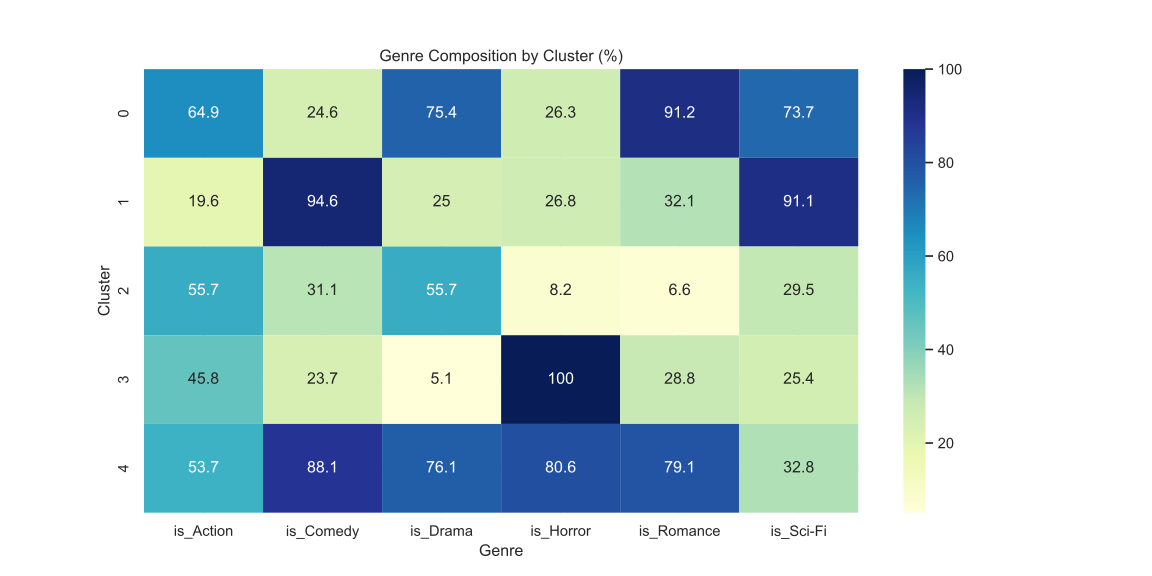
- Genre composition: Percentage of each genre within each cluster to identify dominant genres.
- Average popularity, runtime, and vote averages for each cluster.
- Sample movie titles to provide concrete examples from each group.
Discussion #
Our analysis found that movie features like popularity, runtime, and vote averages are roughly normally distributed with some outliers, and that genres have low correlations with these features. Using both elbow and silhouette methods, we determined that five clusters were optimal.
We then used PCA and t-SNE to simplify the data into two dimensions, making it easier to see how movies cluster together. t-SNE did a better job of separating similar movies into distinct groups.
Here’s what we found:
- Cluster 0 mostly includes Action and Drama movies, with some Sci-Fi mixed in.
- Cluster 1 is almost entirely Comedy.
- Cluster 2 has a mix of Action, Drama, and Comedy.
- Cluster 3 is made up entirely of Horror movies.
- Cluster 4 is most diverse, including Comedy, Drama, Romance, Action, and Sci-Fi.
These insights show that our data naturally groups movies by genre and performance, which can be useful for things like recommendation systems, marketing strategies, and understanding viewer preferences.